Android Tricks 4 All: GAMING
News Update
Loading...
Showing posts with label GAMING. Show all posts

Thursday, November 18, 2021

Skoda Slavia unveil in India LIVE updates: World premiere of Skoda’s new City rival begins

14:20 (IST)

Skoda Slavia: Features

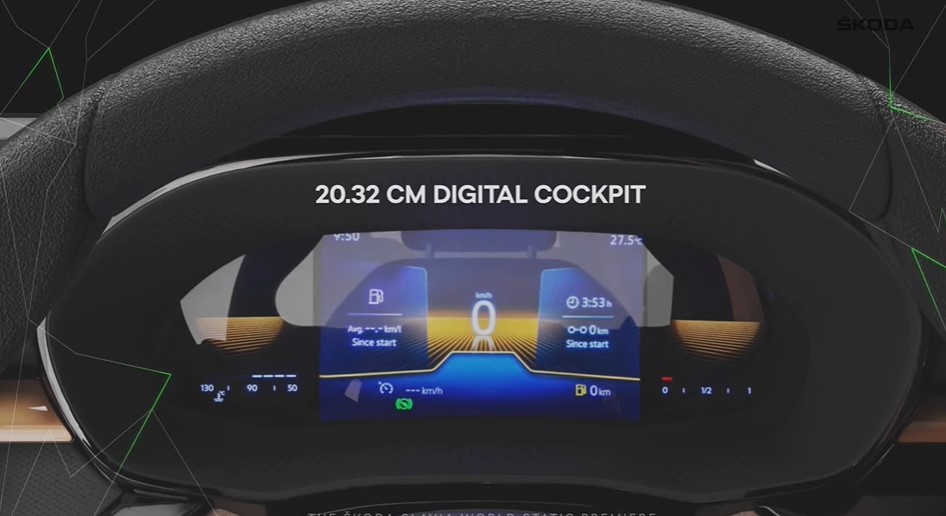
The top-spec Slavia will feature ventilated front seats, the Kushaq's touchscreen infotainment system as well as a full-digital instruments display, which is missing from the Kushaq. 
14:18 (IST)

Skoda Slavia: Dimensions

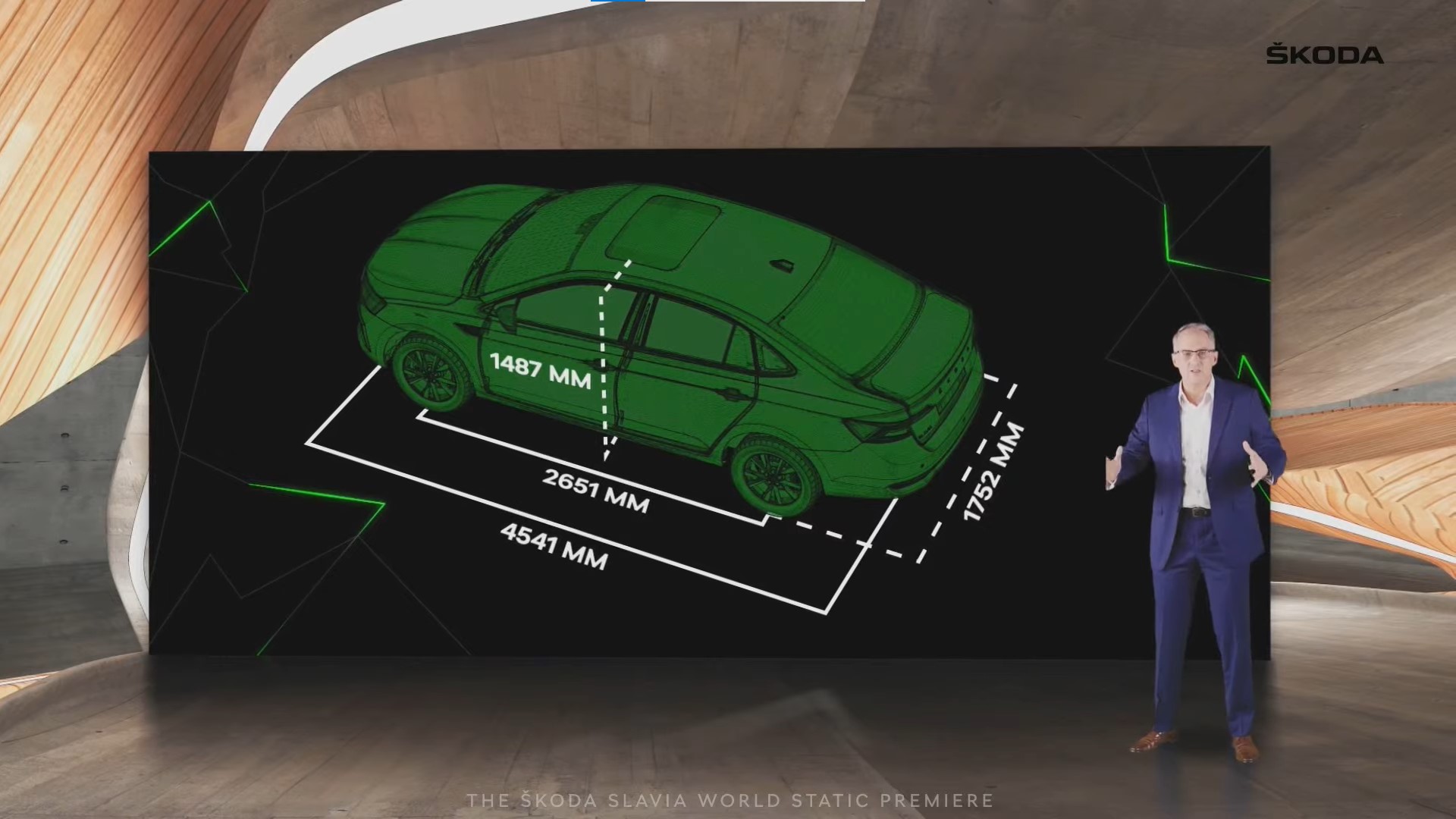
The Slavia is larger than the Gen 1 Octavia, and Skoda claims will be the widest sedan in its segment. Here's a quick look at some of its dimensions.
14:10 (IST)

Skoda Slavia: A glimpse before the unveil

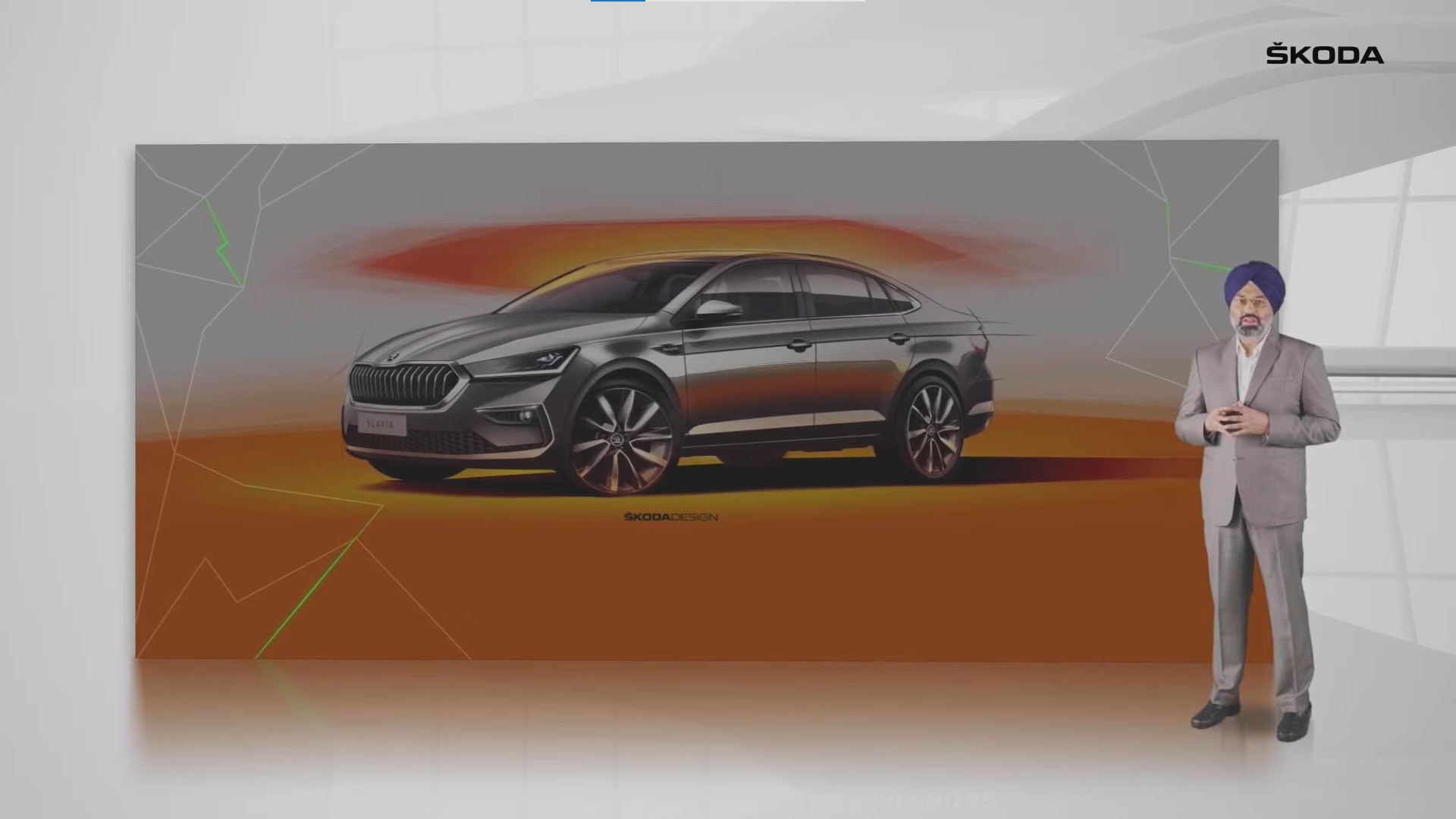
Here's a clearer look at the Skoda Slavia - Gurpratap Boparai reveals a design sketch of the sedan minutes before its full unveiling. 
14:07 (IST)

Slavia vital for Skoda globally

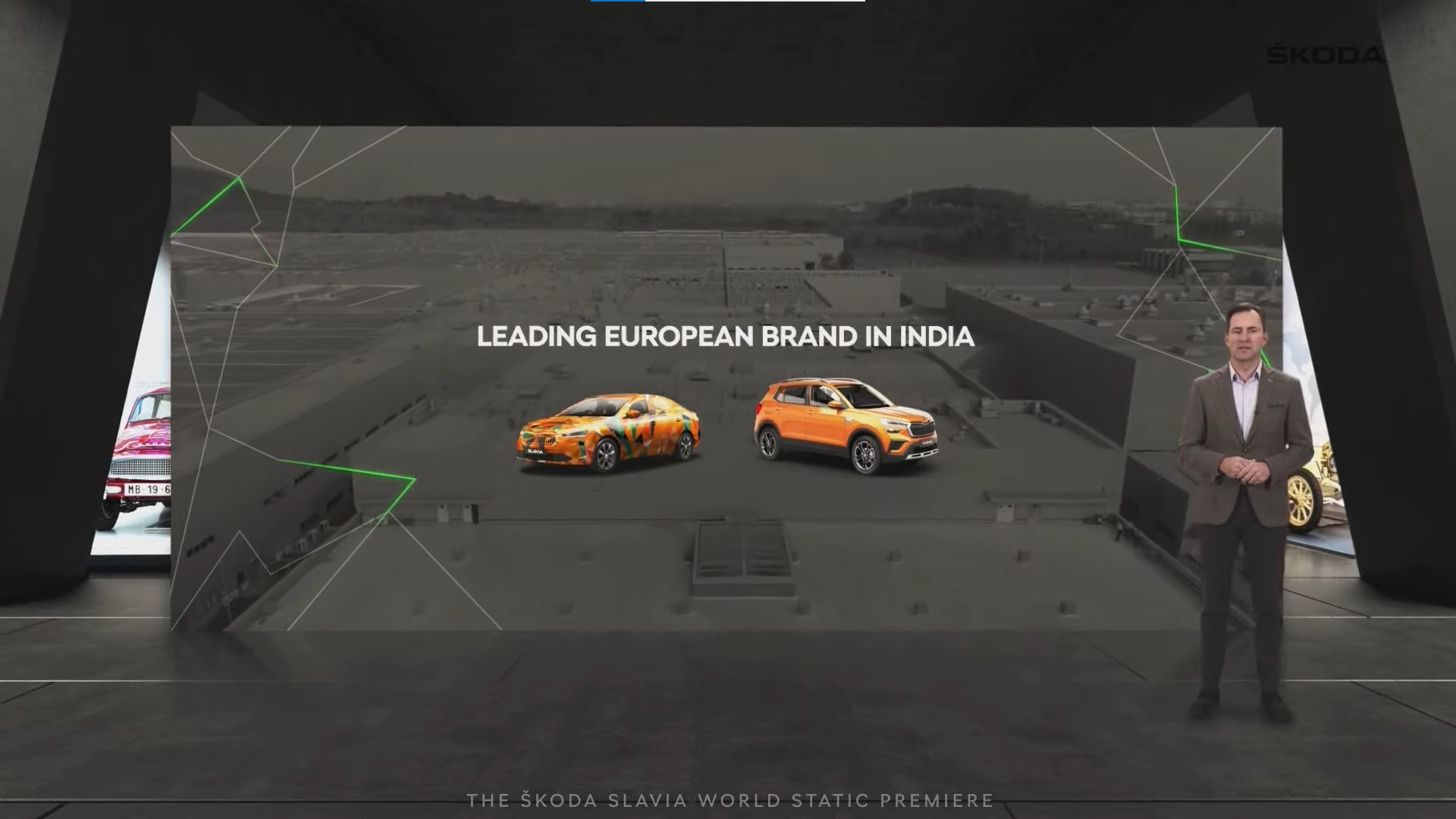
Thomas Schafer adds the Slavia will be instrumental in helping Skoda become the leading European carmaker in India, and will help the company breach the target of 1.5 million vehicle sales globally.
14:05 (IST)

Skoda Slavia: World premiere event begins

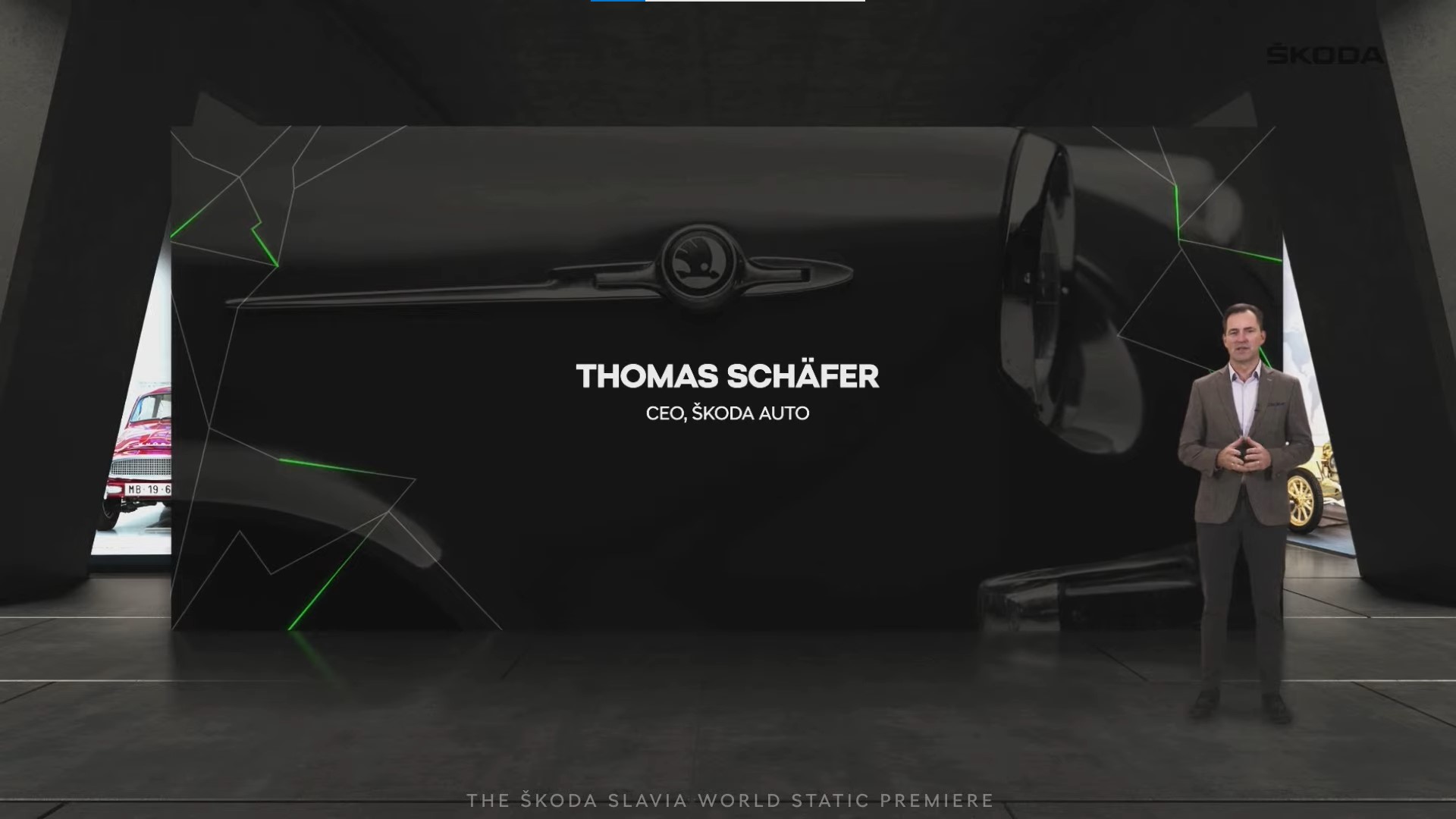
Kicking off the unveil event of the Skoda Slavia is Skoda Auto CEO Thomas Schafer, who says 2020 and 2021 have been incredibly challenging years, but the company has achieved up to 95 percent localisation levels for its MQB A0 IN models.
13:54 (IST)

Skoda Slavia unveiling: Watch it LIVE

You can follow the live stream of the Skoda Slavia's world premiere right here.

13:46 (IST)

Skoda Slavia to spawn Volkswagen alternative

Just like the Kushaq preceded the Taigun, the Slavia will precede Volkswagen's brand-new midsize sedan, understood to be based on the Virtus facelift. It will be almost identical in terms of size and will have the same mechanicals, but will look significantly different inside and out. Today, however, is all about the Slavia, the unveil of which begins in less than 15 minutes from now!

13:33 (IST)

Skoda Slavia: The origins

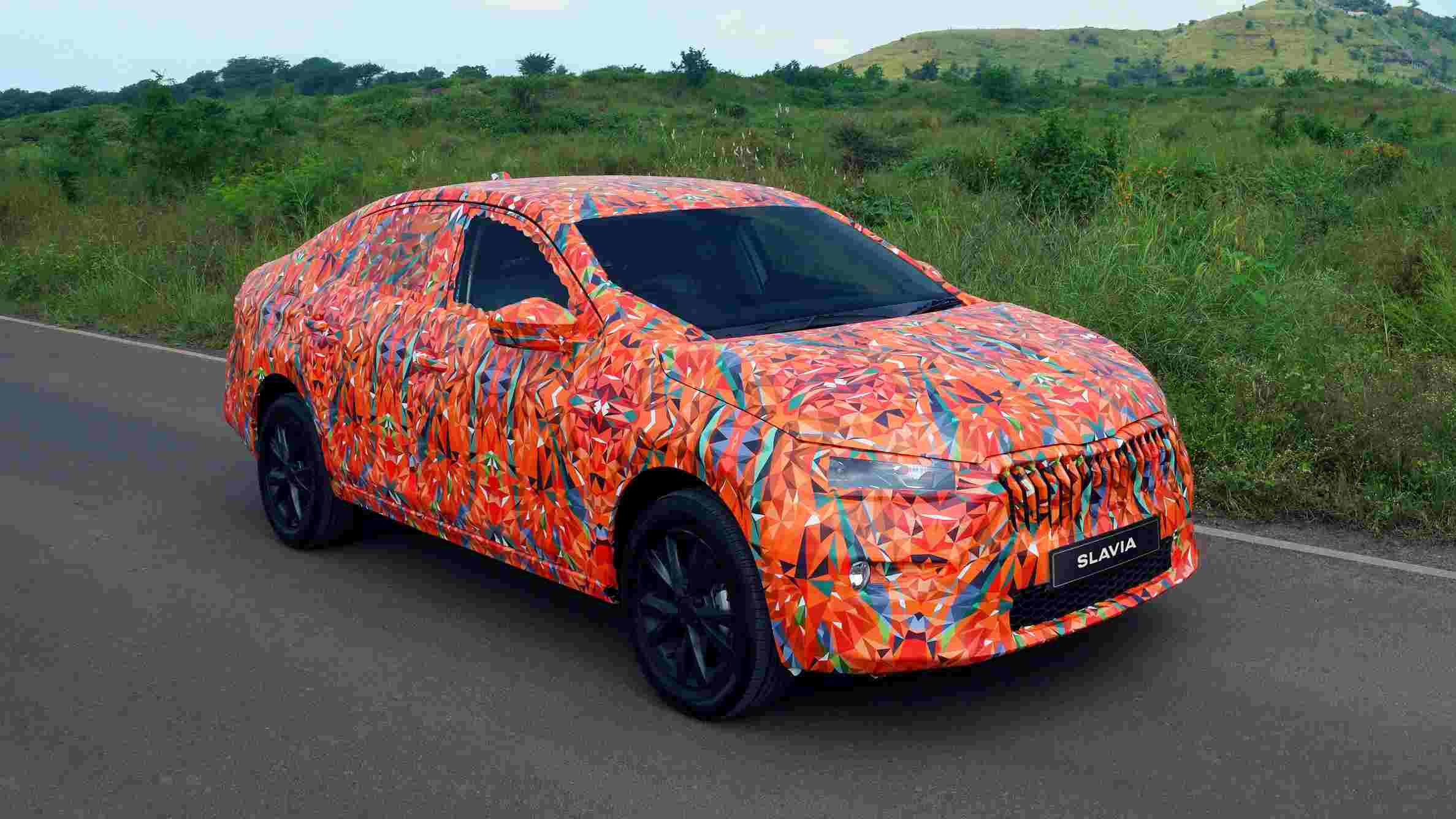
The Skoda Slavia will be the third model to use the Volkswagen Group’s tailored-for-India MQB A0 IN platform – the first two being the Skoda Kushaq and the Volkswagen Taigun midsize SUVs, which were launched just a few months ago.
13:15 (IST)

Skoda Slavia world premiere: The countdown begins

Hello and welcome, folks, to Tech2's live coverage of the world premiere of Skoda's new midsize sedan - the Skoda Slavia. The unveil gets underway at 2 pm IST, so sit back as we bring you all the updates LIVE from the event!
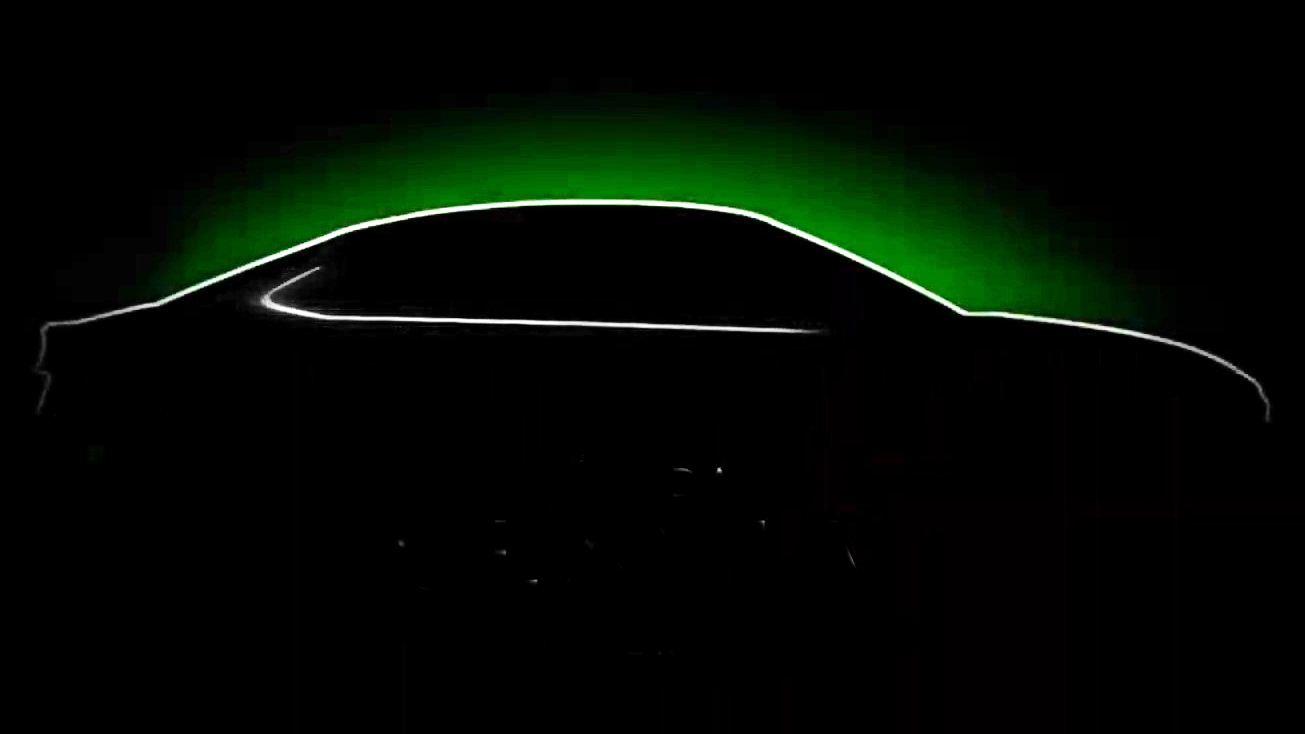
Today is the day – the Skoda Slavia is about to make its world premiere right here in India, and the unveil event is set to begin at 2 pm IST. The Skoda Slavia will be the third model to use the Volkswagen Group’s tailored-for-India MQB A0 IN platform – the first two being the Kushaq and the Volkswagen Taigun midsize SUVs – and is likely to be launched early in 2022. A few days ago, Skoda revealed the Slavia will measure 4,541 mm in length, 1,752 mm in width and 1,487 mm in height, making it one of the biggest sedans in its class. The Slavia’s 2,651 mm wheelbase is also among the largest in the midsize sedan segment.

The Slavia name, says Skoda, has been chosen as an ode to its past, as company founders Václav Laurin and Václav Klement had marketed their own bicycles under the same name in 1896. While the company has refrained from giving too much away at this point, it says its new ‘notchback’ will be ‘an elegant, powerful and safe saloon car’ that will follow in the footsteps of the bigger, more powerful and more luxurious Skoda Octavia and Skoda Superb sedans. Tech2 understands that with the Slavia, Skoda will focus equally on driving pleasure as well as rear seat comfort, with space for rear passengers being among the top priorities for the company.

Expect to see an interior similar to that of the Kushaq with several elements – such as the 10-inch touchscreen infotainment system two-spoke steering wheel, a touch-sensitive climate control panel and vital control switches – to be carried over from the midsize SUV, but Skoda is likely to add some more feel-good features to the Slavia.

Just like the Kushaq, the Skoda Slavia, too, will be offered will be two turbo-petrol engine options – a 1.0-litre, three-cylinder TSI that makes 110 hp and 175 Nm of torque, and a 1.5-litre, four-cylinder TSI producing 150 hp and 250 Nm of torque. A six-speed manual will be available with both engines; the 1.0 TSI will have the option of a six-speed torque convertor automatic, while the 1.5 TSI – aimed at driving enthusiasts – will be available with a seven-speed DSG automatic (with paddle shifters). There will be no diesel engine on offer, but the 1.5-litre TSI will feature active cylinder deactivation tech, which will help boost fuel efficiency.

Expect Skoda Slavia prices to range from Rs 10-17 lakh (ex-showroom), which will enable it to go head-on against the fifth-generation Honda City, Hyundai Verna, Maruti Suzuki Ciaz and Toyota Belta. It will also compete against its cousin from Volkswagen, which will be based on the same platform, and will be launched a little after the Slavia.


source https://www.firstpost.com/tech/auto-tech/skoda-slavia-unveil-in-india-live-updates-world-premiere-of-skodas-new-city-rival-begins-10146141.html

Wednesday, November 17, 2021

Hyundai Ioniq Seven electric SUV concept debuts in LA with sofa-style third row, 77-inch roof display

Hyundai Ioniq Seven electric SUV concept debuts in LA with sofa-style third row, 77-inch roof display

It’s not just Kia that has unveiled a new electric SUV concept at the LA Auto Show 2021 – parent company Hyundai has also taken the wraps off its brand-new electric vehicle (EV) concept, and it’s named the Hyundai Ioniq Seven. Billed a ‘category-bending’ proposition, the Hyundai Ioniq Seven is pretty radical even by concept standards, and while it looks like it’s far away from being production ready at this point, it does provide a glimpse of Hyundai’s future flagship electric SUV – or SUEV, as Hyundai is calling it.

The Hyundai Ioniq Seven is larger than Hyundai's biggest production SUV yet, the Palisade, and has a massive 3,200 mm wheelbase. Image: Hyundai

Unlike the Kia EV9 (which it shares its mechanicals with), the Hyundai Ioniq Seven adopts a notably different design language. While the EV9 is all angular and sharp-edged, the Ioniq Seven is softer and more rounded, without compromising on visual muscle. At around five metres in length, two metres in width and 1.8 metres in height, the Ioniq Seven is bigger than Hyundai’s biggest combustion engine SUV at present – the Hyundai Palisade – so it is an imposing SUV and will have plenty of presence. Its wheelbase (3,200 mm) is substantially longer than the Palisade's, and is almost identical to that of the long-wheelbase Mercedes-Benz S-Class.

The 3,200 mm wheelbase is almost identical to that of the long-wheelbase Mercedes-Benz S-Class. Image: Hyundai

Exterior highlights include the ‘Parametric Pixel’ lights up front, chunky five-spoke alloys with integrated ‘Active Air’ flaps, which deploy or retract for brake cooling and low-drag purposes respectively, retracting cameras that replace wing mirrors, beefy wheel arches, pillarless coach doors, a sloping roofline and an almost-bread van-like tail section, which ends with an all-glass tailgate encased by pixel-like tail-lights. All in, the Ioniq Seven looks quite interesting on the outside.

All-glass tail gate encased by pixel-style LED tail-lights. Image: Hyundai

It's on the inside where the Ioniq Seven is truly pathbreaking – and even more concept-like, which is to say that most of these elements are unlikely to make it to the production model. While it is a three-row SUV, Hyundai has chosen to break away from the established seating layout and equipped the SUV with swivelling lounge-style chairs for the driver and front passenger (which can also be moved fore and aft), a dedicated footrest housing a 27-inch screen as well as a ‘shoe care’ shelf and a curved sofa-style seat that stretches from the third row to the second row.

No steering wheel inside the Ioniq Seven - space freed up used for full-width display and storage shelf. Image: Hyundai

There is no steering wheel inside the Ioniq Seven – it’s replaced by a joystick that stows away into the driver’s seat when not needed, and the space liberated on the dashboard is used for a full-length infotainment display as well as a storage shelf. Also part of the package is a giant, 77-inch ceiling display for entertainment purposes, a built-in refrigerator, tube-type ambient lighting lamps placed in the doors, aircraft-style interior ventilation (with horizontal and vertical air flow controls to prevent cross-contamination between vehicle occupants), a panoramic air purifier as well as UVC lighting, which engages once passengers step out, to sterilise the vehicle’s interior.

The virtual sunroof doubles up as a 77-inch entertainment screen. Image: Hyundai

To lend it more of a home interior feel, Hyundai has used materials such as copper, bamboo wood, mineral plaster and recycled fabric, and also included shelves to store odds and ends. It’s safe to say that while a lot of these elements are promising and forward-looking, safety regulations may prevent them from carrying over into production.

Traditional third row makes way for curved sofa-style seating. Image: Hyundai

Based on the scalable E-GMP architecture that also underpins the Hyundai Ioniq 5, Kia EV6 and the EV9 Concept, the Hyundai Ioniq Seven concept is also said to have a range of over 480 kilometres on a full charge, and thanks to its 800-volt architecture, the Seven is said to go from 10 to 80 percent charge in just 20 minutes when plugged into a 350 kW DC fast charger. The production version of the Ioniq Seven is likely to get a large battery (close to 80 kWh capacity) and a dual-motor setup with varying power outputs, depending on the variant.

It remains to be seen if the production-spec Ioniq Seven – expected to debut in 2023 – will replace any of Hyundai’s existing combustion engine SUVs, or if it will be offered as a standalone model under the Ioniq sub-brand. At present, the only Hyundai EV on sale in India is the Kona Electric, and while there’s no official communication on the same, the production Ioniq Seven may just end up being introduced in India after its global launch, as it would be the perfect halo model for Hyundai’s SUV portfolio.


source https://www.firstpost.com/tech/auto-tech/hyundai-ioniq-seven-electric-suv-concept-debuts-in-la-with-sofa-style-third-row-77-inch-roof-display-10145721.html
LA Auto Show 2021: Kia EV9 Concept previews incoming flagship electric SUV, has a range of up to 480 km

LA Auto Show 2021: Kia EV9 Concept previews incoming flagship electric SUV, has a range of up to 480 km

Kia has taken the wraps off its latest electric vehicle (EV) concept – the Kia EV9 SUV. Previewed in hazy teasers a few days ago, the Kia EV9 has made its global debut at the 2021 Los Angeles Auto Show alongside its mechanical cousin, the Hyundai Seven SUV concept, and while the two share underpinnings, the EV9 is a pretty distinct take on what Kia thinks a flagship electric SUV should look like. While it is clearly a concept at this point, the EV9 previews Kia’s upcoming range-topping electric SUV.

Inspired by the ‘contrasts of nature’, the EV9, with its upright proportions, squared-off front-end and block-like body is in the mould of some iconic, burly SUVs and will appeal to fans of this body style. Measuring in at 4,930 mm in length, 2,055 mm in width and 1,790mm in height, the Kia EV9 is taller and wider than Kia’s biggest combustion engine SUV, the Kia Telluride, and also has a substantially longer 3,100 mm wheelbase. In fact, the EV9 is closer in size to the new Range Rover, which will also be available as an all-electric SUV in the time to come.

The Kia EV9 Concept is larger than the Telluride, and is nearly the same size as the new Range Rover. Image: Kia

Design highlights of the EV9 comprise what Kia calls the ‘Digital Tiger Face’, which brings features slim, L-shaped LED lights up front, each flanked by a set of six circular daytime running lights that light up perforations in the otherwise sealed-off front-end. The EV9 has muscular wheel arches, blacked-out pillars (with a triangular shape for the D-pillar), a large glass roof, rear-hinged doors and slender LED tail-lights.

The new air vent design up front is said to reduce the frontal mass of the vehicle and greatly improve aerodynamics, and the hood vent duct area houses a solar panel that helps replenish the battery in sunny conditions. To further refine aerodynamics, the EV9 is equipped with 22-inch aero-focused triangular alloy wheels, retractable roof rails that can be tucked away when not needed, and ditches wing mirrors for cameras.

A 27-inch ultra-wide screen is the standout in an otherwise pared-back interior. Image: Kia

Inside, the Kia EV9 Concept has a funky pop-up steering wheel and a 27-inch ultra-wide screen that combines the digital driver display and the touchscreen infotainment system a standout in an otherwise minimalistic interior. Recycled fish nets have been used for the EV9’s flooring, and its seat fabrics utilise recycled plastic bottles and wool fibres. The EV9 will only have vegan leather on the inside, and the company is working to phase out the use of leather in its vehicles going forward.

There are three interior ‘modes’ Kia has outlined for the EV9 – ‘Active’, where all seats face forward when the SUV is moving; ‘Pause’, where the front row seats swivel to face passengers seated in the third row, with the second row folding to become a table, and ‘Enjoy’, where all three rows turn around and the tailgate opens to provide a clear view of the surroundings. Pause and Enjoy modes can only be engaged when the SUV is stationary.

The production version of the Kia EV9 Concept is expected to have a dual-motor setup with a total peak output of 580 hp. Image: Kia

Based on the Hyundai Motor Group’s E-GMP architecture, the production-spec Kia EV9 – in range-topping form – is expected to get a 77.4 kWh lithium-ion battery and a dual-motor setup, which would bless it with a combined peak output of close to 580 hp. Kia says the EV9 has a range of up to 480 kilometres on a full charge, and with a 350 kW DC fast charger, can go from 10 percent to 80 percent charge in less than 30 minutes.

The production version of the Kia EV9 is expected to debut sometime in 2023, and while many of the concept car elements are likely to be dropped, expect the SUV’s design to remain more or less unchanged when it hits the road. Kia has previously revealed its desire to bring electric vehicles to India in the coming years, and while there’s no official communication about it, the EV9 could well serve as a halo product for the Korean carmaker in the Indian market. If it does make its way here, expect the Kia EV9 to be a range-topping offering, possibly brought in as a full import and commanding a fitting premium.


source https://www.firstpost.com/tech/auto-tech/la-auto-show-2021-kia-ev9-concept-previews-incoming-flagship-electric-suv-has-a-range-of-up-to-480-km-10145311.html
Microsoft Surface Go 3 launched in India: Check the price, features and specifications here

Microsoft Surface Go 3 launched in India: Check the price, features and specifications here

US-based tech giant Microsoft’s Surface Go 3 two-in-one laptop that was introduced globally in September, is now available in India. The Surface Go 3 is said to deliver 60 percent faster performance thanks to the 10th-generation Intel Core i3 processor, which is an upgraded version of the processor that powers the older Surface Go 2.

Microsoft Surface Go 3: Features and specifications

The Microsoft Surface Go 3 two-in-one device comes with a 10.5-inch, 1080p display with touch support, a 5 MP front camera and Corning Gorilla Glass 3 protection. The device can also be had with either the 10th-Gen Intel Core i3-10100Y processor or the dual-core Intel Pentium Gold 6500Y processor.

Sales of the Microsoft Surface Go 3 will begin in India on 23 November. Image: Microsoft

It comes preloaded with Windows 11, and other highlights include Bluetooth 5.0, up to 11 hours of battery with typical use and Wi-Fi 6. Not to forget, the Microsoft Surface Go 3 further comprises a Surface Connect port, a 3.5 mm headphone jack, a USB-C port and a MicroSDXC card reader.

As for the price, the Surface Go 3 that features the 10th-generation Intel Pentium Gold processor, 128 GB SSD and 8 GB of RAM is currently available to pre-book on Amazon for Rs 57,999. Sale will commence from 23 November.

Interested customers can also pick the base model that ships with the Intel Pentium Gold 6500Y processor. Furthermore, the device is available in a Platinum finish, while those pre-ordering it will receive a complimentary Surface Pen worth Rs 9,699.

Additionally, Business customers in India can avail the Surface Go 3 notebook at a starting price of Rs 42,999, with the Intel Pentium Gold processor paired with a 64GB eMMC and 4GB RAM. In addition, there is also another option with 4GB RAM, 64GB eMMC and the 10th-generation Intel Core i3 processor, which is priced at Rs 47,999.

The top-of-the-line variant will cost Rs 62,999, and will pack 8 GB RAM, a 128GB SSD and the 10th-generation Intel Core i3 processor. The much-awaited commercial SKUs will be available from December through authorised resellers.


source https://www.firstpost.com/tech/news-analysis/microsoft-surface-go-3-launched-in-india-check-the-price-features-and-specifications-here-10144771.html
Instagram reportedly asking users to submit video selfie for account verification in a bid to weed out bots

Instagram reportedly asking users to submit video selfie for account verification in a bid to weed out bots

Some users have reportedly been asked by Instagram to provide a video selfie taken from multiple angles to verify their account. According to XDADevelopers, several users have said they were asked to take a video selfie to verify their current accounts.

For the uninitiated, the social platform began testing the feature last year, but stopped midway because of technical issues. Instagram has struggled with the issue of bot accounts for a long time, and such accounts usually send spam messages, harass other users and artificially inflate followers. This is the reason why the app is looking to curb the prevalence of bots on the platform.

Instagram hopes to establish the identity of the user behind the account to eliminate bot accounts. Image: Nandini Yadav/tech2

Instagram's public relations team on Twitter stated that accounts with suspicious behaviour could be asked to submit a video selfie. The company reiterated the feature doesn’t use facial recognition, adding that its teams review the videos to establish if "there's a real person behind the account".

Meanwhile, as per a screenshot posted by a social media consultant Matt Navarra on Twitter, he informed that the photo sharing app is confirming the identity of users by video selfies while “Meta promises not to collect biometric data.”

Another user shared a screenshot of the help screen requesting the user to submit a video selfie. The image showed that on opening the feature, the app asks for a video showing all angles of one's face to prove that they are a real person. Furthermore, it also shows the verification screen for multiple people.

Account users will have to submit the video, after it has been recorded, to the platform for confirmation of identity. Additionally, Instagram promises the video will not be visible on the platform and will be deleted within 30 days from the company's servers.

So far, it is unclear whether this feature is still being tested or being gradually rolled out. But it's clear that through this process, Meta is looking to reduce the number of fake or spam accounts on the platform. However, Meta has not commented on whether everyone would eventually have to submit a video selfie.

The company is also testing its 'Take A Break' feature, which will remind users to close the app after they have been on it for a specified duration.


source https://www.firstpost.com/tech/news-analysis/instagram-reportedly-asking-users-to-submit-video-selfie-for-account-verification-in-a-bid-to-weed-out-bots-10143781.html
Honda Navi launched in the US, becomes first developed-in-India Honda 2W to be sold in the States

Honda Navi launched in the US, becomes first developed-in-India Honda 2W to be sold in the States

The Honda Navi has gone on sale once again, but this time, in the United States. Yes, the diminutive moto-scooter – which was conceived and developed by Honda Motorcycle and Scooter India – has found its latest market in the States, where it has been introduced as the smallest, most accessible and most affordable two-wheeler from Honda, with a base price of $1,807 – or Rs 1.34 lakh, nearly three times the price tag it sported in India.

The Honda Navi, at $1,807, costs about three times as much in the US as it did in India, but is still the most affordable Honda two-wheeler in the States. Image: Honda

The Navi is the first Honda two-wheeler developed by the manufacturer’s Indian arm to go on sale in the US, which will certainly serve to flatter the HMSI team responsible for its creation. There is no official statement on the same, but it’s more than likely that the Honda Navi being sold in the US is also made in India, as the plucky moto-scooter is manufactured only at HMSI’s plant in Tapukara, Rajasthan, for export markets.

Launched in India back in 2016, the Honda Navi – a repurposed Honda Activa under the skin – certainly got two-wheeler buyers curious with its funky appearance, peppy performance and even witnessed surprisingly strong demand initially, crossing the one lakh unit sales milestone in August 2018.

Sold without the lockable storage box as standard fitment, the Navi looked like it was missing an engine, and its quirky appearance failed to win over buyers in India. Image: Honda

However, its small dimensions and quirky looks didn’t go down too well with the Indian audience, with many terming it as comical and possibly even a misfit for the masses. Honda eventually decided to stop selling the Navi in India ahead of the BS6 emission norms coming into effect, but continues to manufacture it for other markets, where it continues to do surprisingly well.

Compared to what we saw, the US-spec Navi remains largely identical, with the only changes being new turn indicators and a mildly modified instrument cluster that now includes MPH markings for the speedometer.

Revised speedometer for the US-spec Navi includes MPH markings. Image: Honda

It is a novel offering for budding riders in the US in the way that it is considerably cheaper than the most affordable Honda two-wheeler available in the States, is carburetted in the age of fuel injection, has the Activa’s trusty 110 cc engine and CVT combination, rides on a 12-inch front wheel (10-inch at the rear), has drum brakes at both ends, lacks ABS, weighs just 107 kg and offers a mileage of 110 mpg – or around 47 kpl. The Navi will be available in the US from January 2022 onwards.

HMSI is now developing more two-wheelers specifically for the Indian market, and if the Navi is well received by US buyers, it will be interesting to see if Honda chooses to ship more developed-in-India models to the States. In recent times, Honda’s Indian arm has rolled out motorcycles such as the Honda H’ness CB 350, Honda CB 350 RS and Honda CB200X specifically for the domestic market, with more midsize offerings in the pipeline, and some of those could be ideal candidates for markets overseas, including the US.


source https://www.firstpost.com/tech/auto-tech/honda-navi-launched-in-the-us-becomes-first-developed-in-india-honda-2w-to-be-sold-in-the-states-10143251.html

Tuesday, November 16, 2021

Russian anti-satellite weapon test creates 'space junk': What it is and how to deal with the debris

Russian anti-satellite weapon test creates 'space junk': What it is and how to deal with the debris

On 15 November 2021, U.S. officials announced that they had detected a dangerous new debris field in orbit near Earth. Later in the day, it was confirmed that Russia had destroyed one of its old satellites in a test of an anti-satellite weapon. Wendy Whitman Cobb is a space security researcher. She explains what these weapons are and why the debris they create is a problem now – and in the future.

What do we know?

Russia launched an anti-satellite test that destroyed one of its older satellites. The satellite broke up and created thousands of pieces of debris in orbit, ranging in size from tiny specks up to pieces a few feet across. This space junk will linger in orbit for years, potentially colliding with other satellites as well as the International Space Station. The space station crew has already had to shelter in place as they passed near the debris cloud.

What’s an anti-satellite weapon?

Anti-satellite weapons, commonly referred to as ASATs, are any weapons that can temporarily impair or permanently destroy an orbiting satellite. The one that Russia just tested is known as a direct ascent kinetic anti-satellite weapon. These are usually launched from the ground or from the wings of an airplane and destroy satellites by running into them at high speeds.

A similar weapon type, called co-orbital anti-satellite weapons, are first launched into orbit and then change direction to collide with the targeted satellite from space.

A third type, non-kinetic anti-satellite weapons, use technology like lasers to disrupt satellites without physically colliding with them.

Space agencies have been developing and testing anti-satellite weapons since the 1960s. To date, the U.S., Russia, China and India have demonstrated the ability to attack satellites in orbit that support services like GPS, communications and weather forecasting.

Why is debris a problem?

Regardless of the cause, space debris is a serious problem.

Larger pieces are easier to track and avoid but it’s difficult to track pieces smaller than 4 inches (10 centimeters). Even small debris can still pose a major threat though. Space debris is often traveling faster than 17,000 mph around the Earth. At that speed, pieces of debris could destroy any spacecraft or satellite it collided with. In the 1980s, a Soviet satellite broke up as a result of a suspected debris strike.

More worrisome is the danger debris poses to crewed space missions. In July 2021, one of the International Space Station’s robotic arms was struck by a piece of debris that put a 0.2-inch (0.5 cm) hole clean through a part of the arm. While the damage did not need to be fixed, officials characterized it as a lucky strike – if it had struck a different part of the station, the situation could have been a lot worse.

Space debris is also a significant threat to people on Earth. Satellites play a vital role in the global economy through GPS, communications and weather data. If services such as these were disrupted, there would be significant economic cost. One study found that a GPS outage could cost the U.S. up to $1 billion a day.

There are currently thousands of pieces of space junk circling the Earth, with sources as varied as old rocket bodies, dead satellites, debris from previous collisions and tests, and lost items from astronauts. The problem – like with the environment – is that there is little incentive for individual countries to avoid generating debris or cleaning it up.

The amount of space debris has only increased over time. For years, scientists have been warning about the possibility of a collision cascade. As the amount of debris increases, the chance of collisions between it and other satellites and debris also goes up. More collisions might then leave certain orbits completely unusable. While this could take decades to play out, events like the Russian test will only make such an outcome more likely.

What to do now?

In the short term, little can be done to mitigate this new cloud of space debris, but anyone with anything in space is on high alert to avoid it.

The US government and commercial companies are tracking the new debris, and the crew on the International Space Station have been ordered to keep certain modules closed off as they continue to pass through the debris cloud. As the new debris spreads out and the pieces are tracked, station controllers will have a better understanding of the danger posed to the crew.

In the long run, experts recommend working on global solutions to remove debris. This includes taking measures to prevent debris in the first place and removing debris that is already in space. Several governmental and international organizations have proposed ways to prevent new debris, but these are informal and not legally binding.

Remediation is a tougher challenge. Technology to remove debris has not yet been fully developed, but even still, its deployment is a sensitive subject. The same technology that might be used to remove a piece of space junk could also be used for attacking a satellite. This dual-use technology poses challenges, as it can raise suspicions that countries are testing anti-satellite weapons under the cover of debris removal.

Despite the difficulties, there is growing international recognition that space debris is a dangerous problem. A consortium of private companies recently created the Net Zero Space charter to reduce debris, and the U.S. Space Force is looking for ways to combat the problem as well. While the world still does not yet have a full understanding of Russia’s actions, this event is a wake-up call on the importance of efforts to reduce pollution in Earth’s orbit.The Conversation

Wendy Whitman Cobb, Professor of Strategy and Security Studies, US Air Force School of Advanced Air and Space Studies. This article is republished from The Conversation under a Creative Commons license. Read the original article.


source https://www.firstpost.com/tech/news-analysis/russian-anti-satellite-weapon-test-creates-space-junk-what-it-is-and-how-to-deal-with-the-debris-10143351.html
Battlegrounds Mobile India developer Krafton permanently bans over 25 lakh accounts for cheating

Battlegrounds Mobile India developer Krafton permanently bans over 25 lakh accounts for cheating

PUBG Mobile’s India version, Battlegrounds Mobile India’s developer Krafton has said that it has banned 25 lakh accounts permanently, and over seven lakh accounts temporarily in a roughly 40-day time frame. The company has banned these accounts on account of cheating and has listed out the steps to remove cheaters. The South Korean developer has said that it has cleaned out most of the cheaters in the game. Krafton previously banned about 88,000 accounts in a week in October, and 1,40,000 accounts in September.

The company was quoted as saying in a statement that it has banned exactly 25,19,262 accounts permanently and 7,06,319 accounts temporarily between October 1 and November 10. “Krafton is constantly taking major efforts to eradicate cheating on cheaters on Battlegrounds Mobile India. In line with its efforts, Krafton now has cleaned out most of the cheaters in the game, making BGMI a much more fun experience, and will continue to take whatever steps are necessary to keep BGMI fair and fun," the developer said in a Facebook post.

“We had initially worked on the model that first offenders will be handed out temporary bans, but as of now, we have shifted all bans to permanent bans. There’s no room for second chance now," Krafton said in its Facebook post. Krafton has also listed some of the steps it took to remove cheaters from BGMI, which include a cheat detection and banning mechanism that allows the system to track cheaters in real time, helping Krafton ban players who use unlawful methods.

Krafton also said that it does manual verification and banning of accounts that use or promote illegal programmers among high-rankers. There is also a real-time monitoring of YouTube for any channels that promote illegal programmes.


source https://www.firstpost.com/tech/gaming/battlegrounds-mobile-india-developer-krafton-permanently-bans-over-25-lakh-accounts-for-cheating-10143151.html
WhatsApp working on two vital new features for Android and iOS users: Check out the incoming additions

WhatsApp working on two vital new features for Android and iOS users: Check out the incoming additions

WhatsApp is said to be working on a couple of new features that will allow users to hide their last seen, status, and profile picture from specific contacts, and a feature where users will be able to listen to a voice note before sending it to their contacts. Both the features are currently in a beta stage and will be rolled out in a future build of WhatsApp, according to WhatsApp tracker WABetaInfo.

The ability to hide last seen, status, and profile picture from specific contacts comes as the company’s extension of the privacy features that are already available on the Facebook-owned instant messaging app. Currently, WhatsApp allows users to hide their profile picture, status and last seen for all contacts at once, without the option of selecting who all can view it.

Now, this is set to change as WhatsApp has been found testing new privacy settings that will allow users to choose whom they want to hide their statuses and pictures from. The feature is being tested on the beta versions of both Android and iOS. WhatsApp currently gives users three options - to show their Status, Profile Picture, and Last Seen to 'Everyone,' 'Nobody,' and 'My Contacts.' The report in WABetaInfo has now said that WhatsApp will add a new option that will be 'My Contacts…Except,' and will allow users to select who all to hide their last seen status and profile picture from. The WABetaInfo report, does not show how the feature will work on WhatsApp, but has shared a screenshot of the new option being added to the privacy settings on the Facebook-owned messaging app.

WABetaInfo said that the feature is currently under development and will be rolled out with a future build.

Apart from this, WhatsApp will soon let its users preview and pause the voice messages. This feature will improve the app’s usability. You will be able to pause the voice message once this functionality is updated. Previously, the app could not pause when recording a voice note.

Along with that, WhatsApp will show waveforms while you record voice notes. According to WABetaInfo, the development of this new feature is still in the early stages but is still available for beta testing on Android and iOS. Until the official release of the feature, there is an easy way you can preview your voice note before sending it: To hear your WhatsApp voice note without sending it, launch the instant messaging app and navigate to the chat to which you’ll be sending the voice note. Slide up the audio recording option to lock it, so you do not have to keep your finger on the audio button while recording.

Once the recording begins, record your audio and, when done, touch the back button to return to WhatsApp’s homepage. Be careful you don’t release the audio by accident. Don’t worry about hitting the back button; your audio will not be discarded. Return to the conversation where you want to share the audio, and the audio clip will be ready for you. To listen to your audio, use the play button. If everything appears to be in order, press the send button. If you wish to re-record your audio, you can even delete it by tapping on the trash icon.


source https://www.firstpost.com/tech/news-analysis/whatsapp-working-on-two-vital-new-features-for-android-and-ios-users-check-out-the-incoming-additions-10143091.html
Best phones under Rs 25,000 (Nov 2021): iQOO Z5 5G, Samsung Galaxy F62 to Mi 10i 5G

Best phones under Rs 25,000 (Nov 2021): iQOO Z5 5G, Samsung Galaxy F62 to Mi 10i 5G

Our collection of the best phones within a budget of Rs 25,000 this month caters to different types of users. Be it the brand-conscious, the gamer or the photography enthusiast or simply someone looking for a slim and stylish phone, we have you all covered. Here, we have phones with powerful processors, impressive cameras, AMOLED screens with high refresh rates, 5G compliance and more in this budget. Take a pick basis what’s most important to you.

Best phones to buy under Rs 25,000 in India

iQOO Z5 5G/Z3 5G

Let’s start with the two best all-round phones in this price segment from Vivo's sub-brand. We have included the iQOO Z3 5G as well as the Z5 5G in this line-up as they aren’t too different from each other (though not identical) and offer impressive features and performance. The top variant of the iQOO Z3 5G with 8 GB RAM and 256 GB of internal storage can be comfortably purchased in this budget. It is powered by Qualcomm’s recent midrange Snapdragon 768 SoC.

iQoo Z5

It has a vibrant 6.58-inch HDR10 compliant Full HD+ LCD screen with a 120 Hz refresh rate for smooth scrolling in compatible apps. Photography is taken care of by three cameras at the back comprising a 64 MP primary camera, an 8 MP ultrawide shooter and a 2 MP macro camera. A 16 MP selfie camera resides in a drop-notch at the top of the screen. A 4,400 mAh battery keeps the phone running for well over a day of moderate use. The company bundles a 55 W fast charger to juice it up in super-quick time.

The iQOO Z5 5G offers small but important upgrades over the Z3. For starters, it has a faster and more recent Snapdragon 778 SoC. Internal storage is upgraded to UFS 3.1 from 2.2, however, you get half the capacity in this budget. It has a larger 6.67-inch Full HD+ LCD screen with a 120 Hz refresh rate. Battery capacity has been bumped up to 5,000 mAh, and while the fast charger is relatively slower at 44 W, it does promise to charge half the battery in 23 minutes.

iQoo Z3. Image: iQoo China website

Both phones run Android 11 with FunTouch UI on top, and the company promises two major Android updates on both devices. While the Z3 ships with FunTouch UI 11.1, the Z5 offers the newer version 12 out of the box. The camera department is identical on both phones.

iQOO Z3 5G price in India: Rs 22,990 for 8 GB RAM/256 GB storage
iQOO Z5 5G price in India: Rs 22,490 for 8 GB RAM/128 GB storage (on Amazon India)

Mi 10i 5G

The Xiaomi Mi 10i 5G is a phone photography enthusiasts will be interested in, courtesy of its 108 MP camera that clicks some crisp shots in various conditions. The support cast consists of an 8 MP ultrawide camera, 2 MP macro camera and a 2 MP depth sensor. The 16 MP front camera does a good job with selfies and video calls. This 5G phone is powered by a Qualcomm Snapdragon 750 SoC, and you get either 6 GB or 8 GB RAM and 128 GB of internal storage that can be expanded further using a micro-SD card.

Image: Tech2/Nimish Sawant

The Mi 10i 5G has a 6.67-inch Full HD+ HDR10 compliant LCD display that can get up to 450 nits bright. This too supports a 120 Hz refresh rate for a flicker-free experience in compatible apps, and is protected against scratches by a layer of Corning Gorilla Glass 5. A 4,820 mAh battery keeps it running for close to a day and a half of moderate use, and the bundled 33 W fast charger claims to take it from 0 to 100 percent in under an hour. The smartphone runs Android 10 with MIUI 12. An Android 11 update has started rolling out for this phone.

Mi 10i 5G price in India: Rs 21,999 for 6 GB RAM/128 GB storage; Rs 23,999 for 8 GB RAM/128 GB storage

Poco X3 Pro

The Poco X3 Pro has the most powerful processor of all phones on this list. It is powered by a near-flagship grade Qualcomm Snapdragon 860 SoC and accompanied by 8 GB RAM and 128 GB of internal storage. This phone is ideal for gaming on a budget and that too at reasonably high settings. This phone too has a 6.67-inch Full HD+ display with a 120 Hz refresh rate. The screen has a layer of Gorilla Glass 6 for protection against scratches.

The POCO X3 Pro will be available for Rs 16,999 during the Flipkart Big Diwali Sale. Image: POCO

The X3 Pro has quad cameras at the back starting with a 48 MP primary camera, an 8 MP ultra-wide shooter, 2 MP macro camera and a 2 MP depth sensor. A small punch-hole at the top of the screen hosts a 20 MP camera for selfies and video calls. Its 5,160 mAh battery easily lasts over a day and a half of moderate use, unless there’s heavy gaming involved. The bundled 33 W fast charger juices it up quickly. The phone runs Android 11 with MIUI 12 on top.

Poco X3 Pro price in India: Rs 20,999 for 8 GB RAM/128 GB storage

Samsung Galaxy F62

The Samsung Galaxy F62 is quite a handful (literally) courtesy of its large 6.7-inch Super AMOLED Plus display and weight in excess of 200 grams. One key contributor to its weight is its mammoth 7,000 mAh battery that can keep the phone powered for close to two-and-a-half days of moderate use. The bundled 25 W fast charger promises to recharge the high-capacity battery in a couple of hours. If you like big-screen phones with extremely long battery life, this is a great option for you.

Samsung Galaxy F62. Image: Samsung

The F62 is powered by Samsung's Exynos 9825 chip, and you get 6 GB RAM along with 128 GB of internal (expandable) storage. The camera department is quite versatile with a combination of 64 MP primary camera, 12 MP ultrawide shooter, 5 MP macro camera and a 5 MP depth sensor to capture some quality photos in various modes. The 32 MP front-facing camera embedded in a tiny punch-hole at the top of the screen should impress selfie enthusiasts. The Samsung Galaxy F62 runs Android 11 with One UI 3.1.

Samsung Galaxy F62 price in India: Rs 23,590 for 6 GB RAM/128 GB storage

Vivo V20 (2021 edition)

The Vivo V20 (2021 edition) is for those looking for a stylish and slim phone. It is less than 7.5 mm thick; a refreshing change from the bulky phones we get these days. Despite the slim profile, it has a respectable 4,000 mAh battery that lasts over a day of moderate use and supports 33 W fast charging. It is powered by Qualcomm’s Snapdragon 730 SoC, along with 8 GB RAM and 128 GB internal storage that can be expanded further to 1 TB with a micro-SD card.

Vivo V20 (2021). Image: Vivo

The phone has a 6.44-inch Full HD+ AMOLED display and a glass back. The rear camera department is handled mainly by the 64 MP primary camera and supported by an 8 MP ultrawide snapper and a 2 MP depth sensor. This phone will also enthuse selfie enthusiasts with its 44 MP front camera with autofocus that can also record 4K videos. This phone runs Android 11 out of the box with FunTouch UI 11 on top.

Vivo V20 (2021 edition) price in India: Rs 22,990 for 8 GB RAM/128 GB storage


source https://www.firstpost.com/tech/news-analysis/best-phones-under-rs-25000-nov-2021-iqoo-z5-5g-samsung-galaxy-f62-to-mi-10i-5g-10142961.html
OnePlus Nord 2 5G x Pac-Man Edition launched: Here's all you need to know about its features, specs

OnePlus Nord 2 5G x Pac-Man Edition launched: Here's all you need to know about its features, specs

The much-awaited OnePlus Nord 2 5G x Pac-Man Edition has finally been launched around the world today, 16 November. While in terms of hardware, the model is the same that was introduced in July by the company, this one features cosmetic changes that reflect the iconic maze action game.

One of the key highlights of the OnePlus Nord 2 5G x Pac-Man Edition over the original OnePlus Nord 2 is its back panel. This panel has a glossy, Pac-Man-inspired finish that glows in the dark. Needless to say, this new smartphone will also evoke feelings of nostalgia in all Pac-Man fans.

Glossy, Pac-Man-inspired finish for the phone's back panel glows in the dark. Image: OnePlus

OnePlus Nord 2 5G x Pac-Man Edition: Features and specifications

The new smartphone is a collaboration between OnePlus and video game publisher Bandai Namco Entertainment. OnePlus has integrated software tweaks in the phone's OxygenOS UI to add Pac-Man elements. This phone comes with games, challenges, and exclusive Pac-Man content which users will need to unlock to experience.

The OnePlus Nord 2 5G x Pac-Man Edition is identical to its vanilla twin that comes with a 6.43-inch Fluid AMOLED display with a 90Hz refresh rate. The smartphone is powered by a MediaTek Dimensity 1200-AI processor paired with 256 GB of internal storage and 12 GB of RAM.

As for battery life, the smartphone comes with a 4,500 mAh battery that can support 65 W fast charging. Talking connectivity options, the phone includes 5G, 4G LTE/ LTE-A, NFC, GPS/ GLONASS/ NavIC, Wi-Fi, Bluetooth v5.2, and a USB Type-C port.

With a 32 MP front camera, the OnePlus Nord 2 5G x Pac-Man Edition has selfie enthusiasts covered. Along with that there is a triple rear camera setup that comes with a 50 MP Sony IMX766 main sensor. It also has a 2 MP mono lens and an 8 MP ultra-wide shooter.

OnePlus Nord 2 5G x Pac-Man Edition: Price

The OnePlus Nord 2 5G x Pac-Man Edition model has been priced at Rs 37,999 for the 12 GB RAM + 256 GB storage option in India. Furthermore, customers can avail an exchange offer of up to Rs 70,460 along with five percent cashback on select American Express cards.

Moreover, OnePlus has announced a contest where three lucky winners will get a pair of free OnePlus Buds Z TWS earphones, along with a OnePlus Nord 2 5G.


source https://www.firstpost.com/tech/news-analysis/oneplus-nord-2-5g-x-pac-man-edition-launched-heres-all-you-need-to-know-about-its-features-specs-10140981.html
Updated Aprilia SR 160, SR 125 scooters launched in India: Check out the prices, design and features

Updated Aprilia SR 160, SR 125 scooters launched in India: Check out the prices, design and features

To freshen up its performance-oriented scooters, Piaggio India has rolled out the updated-for-2021 Aprilia SR 125 and Aprilia SR 160, both of which get minor design changes, a couple of feature additions but are also notably pricier than before. The 2021 Aprilia SR 125 range starts at Rs 1,07,595, which is around Rs 13,000 more than the pre-facelift SR 125, while the 2021 Aprilia SR 160 range starts at Rs 1,17,494, which makes it around Rs 11,500 more expensive than the version it replaces. The SR 160 will also be available in racier-looking Carbon and Race variants, and while prices for these versions weren’t disclosed at the launch, they will almost certainly cost close to Rs 1.30 lakh (all prices, ex-showroom, Pune).

New LED headlight distinguishes the updated Aprilia SR 125 and 160 from the older models. Image: Aprilia

In terms of changes, the Aprilia SR – which has, in effect, stayed largely the same from a design perspective since its launch a good five years ago – gets a new, V-shaped LED headlight with DRLs, a reshaped apron with a redesigned handlebar cover, split seats, an X-shaped motif for the LED tail-light, and the SR 160 Race packs factory-fitted knuckle guards.

When it comes to equipment, the only fundamental addition comes in the form of an all-digital instrument cluster – taken from the more expensive Aprilia SXR 160 – which relays vital info, and surprisingly includes a tachometer, which isn’t necessarily expected on a scooter. However, there's still no Bluetooth connectivity.

No mechanical changes have been outlined, so the SR 125 and SR 160 continue with their existing powerplants. The Aprilia SR 125’s 124.45 cc, three-valve single-cylinder engine makes 9.9 hp and 9.7 Nm of torque, while the SR 160’s 160 cc unit produces 11 hp and 11.6 Nm of torque. Both scooters continue to ride on 14-inch wheels and have a disc brake up front, but the SR 125 only has a combi-brake system, while the SR 160 comes with single-channel ABS.

At this price, the 2021 Aprilia SR 160 is priced precariously close to the more powerful Yamaha Aerox 155, which costs Rs 1.29 lakh (ex-showroom).


source https://www.firstpost.com/tech/auto-tech/updated-aprilia-sr-160-sr-125-scooters-launched-in-india-check-out-the-prices-design-and-features-10140311.html
Longest partial lunar eclipse in 580 years to occur on 19 Nov; all you need to know

Longest partial lunar eclipse in 580 years to occur on 19 Nov; all you need to know

This year, the longest partial lunar eclipse in 580 years will take place overnight on 18-19 November, as per the National Aeronautics and Science Administration (NASA). The eclipse will be visible in all parts of the US and parts of Australia, East Asia and South America as well.

The eclipse will last for about 3 hours 28 minutes and 23 seconds, according to the agency. If we count the time of the penumbral eclipse, meaning when the Moon is in the Earth's outer shadow, the eclipse will last for over six hours.

In India, the eclipse will be visible from some areas of Assam and Arunachal Pradesh for a short while. The eclipse in India will last from 12:48 pm to 4:17 pm.

The partial lunar eclipse will peak around 1:30 pm in the country, when 97 percent of the Moon would be in the Earth’s shadow.
As the excitement among space enthusiasts and astronomers grows for the partial lunar eclipse, here is everything you need to know about lunar eclipses:

What is a lunar eclipse?

A lunar eclipse occurs when the Earth, Sun and Moon are in such an alignment that the Earth blocks the sun’s rays from reaching the moon. This leads to the moon being ‘eclipsed’ by the Earth’s shadow.

There are three types of lunar eclipses- partial, total and penumbral eclipses. A partial eclipse means that the Earth’s shadow obscures the moon partly, while in a total lunar eclipse the celestial body is completely covered by the Earth. A penumbral lunar eclipse occurs when the Moon is in the Earth’s faint outer shadow or penumbra.

Can lunar eclipses occur twice in the same month?

A lunar eclipse can occur twice in a particular month, while in rare cases, three eclipses can also take place. A total of 228 lunar eclipses will take place in the 21st century, as per NASA.

When will the last lunar eclipse occur in 2021?

The last lunar eclipse will occur on 19 November this year, with the moon being partially obscured by the Earth’s shadow.

When will the next lunar eclipse take place?

The next lunar eclipse is scheduled to take place on 16 May next year.


source https://www.firstpost.com/tech/news-analysis/longest-partial-lunar-eclipse-in-580-years-to-occur-on-19-nov-all-you-need-to-know-10140541.html

Monday, November 15, 2021

McLaren refutes news of Audi buyout in official statement, terms report of sale ‘wholly inaccurate’

McLaren refutes news of Audi buyout in official statement, terms report of sale ‘wholly inaccurate’

Following a media report that claimed German carmaker Audi had bought British auto marque McLaren, the McLaren Group put out a statement refuting the news, clarifying that no sale has taken place and that the report is incorrect. On 15 November, British trade magazine Autocar UK cited a source it said was close to the dealing, claiming Audi had bought the McLaren Group outright in a bid to make a full-fledged entry into the world of Formula 1 racing. Shortly after the report was published, McLaren released a statement terming the news ‘wholly inaccurate’.

“The McLaren Group is aware of a news media report stating it has been sold to Audi. This is wholly inaccurate, and McLaren is seeking to have the story removed”, read the official statement.

While Autocar UK did modify its original story to include McLaren’s statement, its original tweet claiming Audi had bought the McLaren Group still remains live on Twitter, and has over 3,200 retweets and 5,300 likes at the time of this piece being filed.

Audi is reportedly keen on making an entry into F1, which was attributed as the main reason for its interest in acquiring McLaren. Image: McLaren

While it rubbished the news of the Audi buyout, McLaren said it does have discussions and collaborations ongoing with ‘relevant partners and suppliers, including other carmakers’, but did not name any of them.

“There has been no change in the ownership structure of the McLaren Group”, the statement concluded.

In response to the developments, an Audi spokesperson told Reuters, “As part of our strategic considerations, we are constantly looking at various cooperation ideas.”

Recent rumours have suggested the McLaren Group had attracted interest from Audi as well as BMW, with the former keen to make an entry into the pinnacle of four-wheeled motor racing. Acquiring McLaren would have given Audi control of its second supercar brand alongside Lamborghini, and could have potentially resulted in technology transfer and powertrain sharing.

The Volkswagen Group is understood to be keen on making a return to F1, and is said to be pushing group brands Porsche and Audi to find a way into the championship.

McLaren has been dealing with financial pressures of late, despite a refinancing of up to 500 million pounds last year. Mike Flewitt – who had been CEO of McLaren Automotive for the last eight years – also quit his role in October.

McLaren is also understood to be gearing up for its India entry, having appointed Infinity Cars as its exclusive importer for our market earlier this year.


source https://www.firstpost.com/tech/auto-tech/mclaren-refutes-news-of-audi-buyout-in-official-statement-terms-report-of-sale-wholly-inaccurate-10140241.html
Tesla reportedly delivered cars to customers with USB ports missing due to global chip shortage

Tesla reportedly delivered cars to customers with USB ports missing due to global chip shortage

Elon Musk's Tesla has reportedly been shipping out a few of its electric cars without Universal Serial Bus (USB) ports. According to Electrek, some Tesla customers noticed that the newly-purchased Model 3s and Model Ys delivered to them are missing USB ports.

After receiving complaints about the issue, Tesla has reportedly told customers the absence of ports is due to the global chip shortage. Moreover, some buyers also alleged Tesla did not even notify them about the lack of these USB ports. For some owners, similar complaints on social media were the reason they got to know about the issue with their vehicle.

Tesla cars missing USB ports in the centre console were also reported to have inactive wireless phone charging systems. Image: Reuters

The issue came to light on 11 November, and the problem seems limited to the Model 3 and Model Y, as per the publication. It was through social media website Reddit that buyers spoke about their concerns about the missing ports. Many buyers said the USB-C ports on the centre console and for rear seat passengers were missing, while others claimed their EV’s wireless phone charging system also wasn’t working, as per Electrek.

Soon after the complaint, many buyers managed to get in touch with Tesla, following which the company asserted the ports will be made available this December. Furthermore, customers can make an appointment to get them installed in their car.

This is not the first time vehicles have been shipped without certain parts by automakers due to the global chip shortage. Recently, BMW dropped touchscreen functionality from some models due to the semiconductor crisis. Meanwhile, both BMW and Tesla have removed passenger seat lumbar support functions from select models.


source https://www.firstpost.com/tech/auto-tech/tesla-reportedly-delivered-cars-to-customers-with-usb-ports-missing-due-to-global-chip-shortage-10137921.html

Sunday, November 14, 2021

All-new Suzuki S-Cross revealed in leaked images ahead of world premiere on 25 November

All-new Suzuki S-Cross revealed in leaked images ahead of world premiere on 25 November

The third-generation Suzuki S-Cross has leaked through a set of photos that show the new SUV parked at the firm's stockyard. The new S-Cross is set to make its global debut later this month on 25 November.

The images show that the new Suzuki S-Cross has shed its crossover stance for a more traditional SUV look. There is a high bonnet line now as well as a generally boxier shape to make the S-Cross look more purposeful than before. The face is dominated by an octagonal grille somewhat similar to the one on the Maruti Suzuki XL6, with a thick chrome band and large Suzuki badging cutting across. Also distinctive are large swept-back LED headlamps and an air dam with a silver skid plate.

Spy shots reveal the new S-Cross is about the same size as the current-gen Vitara SUV. Image: SuzukiGarage via Instagram

In profile, the 2022 Suzuki S-Cross carries a conservative look with simple body panels and an upswept glasshouse. There's a significant amount of body cladding and what seem like 17-inch dual-tone alloys. The rear is more distinctive with its clear, two-part taillamps, prominent lines on the boot lid and more cladding.

The interiors of the Suzuki S-Cross haven't been seen yet but expect significant changes here too. A larger infotainment system with wireless Android Auto and Apple CarPlay can be expected, as well as some form of connected car features. International spec models are also expected to get a suite of advanced driver assistance systems. Other notable features are likely to include a sunroof, climate control, auto headlights and wipers, among other things.

The new S-Cross should continue to be based on an updated version of the Suzuki Global C platform and carry over engines already seen elsewhere in the Suzuki line-up. The 1.5-litre K15B petrol should be the base engine option in certain markets with its 105 hp and 138 Nm and pairing with a five-speed manual or six-speed automatic. Also expected is a 1.4-litre BoosterJet turbo-petrol with around 130 hp and 235 Nm with the same automatic and a six-speed manual. A more advanced form of Suzuki's mild-hybrid tech may make an appearance as well. The turbo-petrol engine option could also be offered with Suzuki's AllGrip all-wheel-drive system.

There is no word yet on the new Suzuki S-Cross' India launch. With a new mid-sized SUV co-developed with Toyota in the works, Maruti Suzuki might see challenges in fitting two similarly sized cars into the market. If the new S-Cross does come to India, expect it to be launched here by late 2022 priced between Rs 9 and 14 lakh.

Image source: suzukigarage via Instagram


source https://www.firstpost.com/tech/auto-tech/all-new-suzuki-s-cross-revealed-in-leaked-images-ahead-of-world-premiere-on-25-november-10137661.html
Instagram introduces text-to-speech function, voice effects for Reels: Here’s how you can use them

Instagram introduces text-to-speech function, voice effects for Reels: Here’s how you can use them

Meta-owned Instagram is bringing two new features to Reels, the app’s TikTok-like short video format. The two features coming to Reels include Text-to-Speech and Voice Effects that offer creators more options while making Reels. The Text to Speech feature lets users use an artificial voice to read any text they add instead of using their voice in the video. Voice Effects, on the other hand, can be used to modify the audio and voiceover on Instagram Reels. These new features were announced by Instagram in a blog post on its Community page on 11 November.

The features come as the company’s latest effort to give users more creative options to explore while making Reels. The new features are being rolled out to users on both iOS and Android.

The Text-to-Speech option can be accessed via the text tool in the Reels camera. It enables an auto-generated voice to read the text one has added to Reels.

As mentioned above, this feature will allow users to use an artificial voice to the videos instead of their own.

Here’s how users can access the text-to-speech feature:
1. Open the Reels Camera in the Instagram app
2. Record video or upload from gallery
3. Tap the Text tool
4. Tap on the text bubble and select “Text to Speech" from the three-dot dropdown menu
5. Select the voice you’d like to use
6. Post

The Voice Effect feature, on the other hand, allows users to modify the audio or voiceover in their Reels.

Currently, Instagram offers five voice effect options - announcer, helium, giant, robot, and vocalist to make funny videos with different voices.

In order to use the new feature, users need to record a reel, and tap the Music Note to open the audio mixer. Then, users need to go to the Effects menu and select a Voice Effect to modify their reel or voiceover.


source https://www.firstpost.com/tech/news-analysis/instagram-introduces-text-to-speech-function-voice-effects-for-reels-heres-how-you-can-use-them-10137381.html
Best phones under Rs 20,000 (Nov 2021): iQOO Z3 5G, Realme 8s 5G to Redmi Note 10 Pro Max

Best phones under Rs 20,000 (Nov 2021): iQOO Z3 5G, Realme 8s 5G to Redmi Note 10 Pro Max

The competition in the sub-Rs 20,000 segment remains stiff, which is good for the consumer, but choosing the right phone from a multitude of options can get confusing. That’s where we come in to shortlist the best of the lot and tell you why you should be buying a particular smartphone. As always, you can expect more than decent processing power, good cameras, high refresh rate displays and more in this budget. A couple of good 5G-compliant phones are also available, so let’s start with those two.

Best phones to buy under Rs 20,000 in India

iQOO Z3 5G

The iQOO Z3 from Vivo’s sub-brand is arguably the best 5G handset in this budget. It has an impressive set of specifications and features with most of the bases covered. It is powered by Qualcomm’s recent midrange Snapdragon 768 SoC, along with 6 GB RAM and 128 GB of internal storage. The Z3 has a 6.58-inch Full HD+ LCD screen with a 120 Hz refresh rate and HDR10 compliance; it is sharp and smooth. A 16 MP selfie camera is located in a drop-notch at the top of the screen.

iQoo Z3

Photography is handled by three cameras at the back starting with a 64 MP primary camera, 8 MP ultrawide shooter and a 2 MP macro camera. The iQOO Z3 5G runs Android 11 with FunTouch 11 UI on top. The company promises two major Android updates and three years of security updates for this phone, which is great to see in this segment. Battery capacity stands at 4,400 mAh, which is good enough to keep the phone running for well over a day of moderate use. The company bundles a 55 W fast charger to recharge it in double quick time.

iQOO Z3 5G price in India: Rs 19,990 for 6 GB RAM/128 GB storage

Realme 8s 5G

The Realme 8s 5G is another good option if you are looking for an affordable 5G phone. It is powered by a Mediatek Dimensity 810 SoC, and again, you get the 6 GB RAM and 128 GB internal storage variant in this budget. It has a 5,000 mAh battery that lasts for a day and a half of moderate use, and supports 33 W fast charging. The company does bundle a fast charger in the package.

Realme 8s 5G

You get three cameras at the back consisting of a 64 MP primary camera, 2 MP macro camera and a 2 MP depth sensor. You also get a 16 MP selfie camera located in a tiny punch-hole at the top of the screen. The Realme 8s 5G has a 6.5-inch Full HD+ display that can get as high as 600 nits bright. It also has a 90 Hz refresh rate for smooth scrolling in compatible apps. The phone runs Android 11 with Realme UI 2.0 on top.

Realme Narzo 8s 5G price in India: Rs 17,999 for 6 GB RAM/128 GB storage

Redmi Note 10 Pro/Pro Max

The Redmi Note 10 Pro and Note 10 Pro Max remain two of the best all-round options in this budget. They are almost identical phones except for the main camera – the Pro has a 64 MP primary camera, while the Max flaunts a 108 MP shooter. The rest of the features are pretty much the same. Each of the primary cameras is accompanied by an 8 MP ultra-wide camera, 5 MP macro camera and a 2MP depth sensor. Both have a 16 MP front camera to handle selfies and video calls. Camera performance is impressive for the segment for both phones, with the Note 10 Pro Max understandably doing slightly better.

Redmi Note 10 Pro Max

The phones sport large 6.67-inch Full HD+ Super AMOLED displays with a rated peak brightness of 1200 nits and Corning Gorilla Glass 5 protection against scratches. The screens are HDR10-compliant and have a 120 Hz refresh rate: a rare combination of Full HD AMOLED display and high refresh rate in this budget. These Redmi phones are powered by Qualcomm’s Snapdragon 732G SoC, and you get 6 GB RAM and 128 GB internal storage that can be expanded further with a microSD card. Both phones have 5,020 mAh batteries that last over a day and a half of moderate use, with a 33 W fast charger included in the bundle. The phones run Android 11 with MIUI 12.

Redmi Note 10 Pro price in India: Rs 17,999 for 6 GB RAM/128 GB storage
Redmi Note 10 Pro Max price in India: Rs 19,999 for 6 GB RAM/128 GB storage

Poco X3 Pro

Poco’s X3 Pro retains its position on this list courtesy of its powerful processor. It is powered by a Qualcomm Snapdragon 860 SoC, which is almost flagship-grade. It is accompanied by 6 GB RAM and 128 GB of internal storage. Thus, you have ample processing power for any task you may perform on a phone, including gaming at reasonably high settings. This phone, too, has a 6.67-inch Full HD+ display with a 120 Hz refresh rate for smooth scrolling in compatible apps, but you get an LCD screen instead of AMOLED. The screen is protected against scratches by a layer of Gorilla Glass 6.

The POCO X3 Pro will be available for Rs 16,999 during the Flipkart Big Diwali Sale. Image: POCO

The Poco X3 Pro has quad cameras at the back consisting of a 48 MP primary camera, 8 MP ultra-wide shooter, 2 MP macro camera and a 2 MP depth sensor. A small punch-hole at the top of the screen hosts a 20 MP camera for selfies and video calls. Camera quality is good enough for the segment. Its 5,160 mAh battery easily lasts over a day and a half of moderate use. The bundled 33 W fast charger helps juice it up quickly. The phone runs Android 11 with MIUI 12 on top.

Poco X3 Pro price in India: Rs 18,999 for 6 GB RAM/128 GB storage

Motorola G60/G40

The Motorola G60 is a perfect option for those who like large-screen phones or stock Android UI, or both. And that’s not all – this phone, too, has a 108 MP camera at the back, along with an 8 MP ultrawide camera and a 2 MP depth sensor. You get a huge 6.8-inch Full HD+ LCD display with HDR10 compliance and a 120 Hz refresh rate. A tiny punch-hole at the top of the screen hosts a 32 MP front camera that will have selfie enthusiasts interested.

Motorola G60

The Moto G60 is powered by a Snapdragon 732G chip and is accompanied by 6 GB RAM and 128 GB internal (expandable) storage. Battery backup is quite solid with a 6,000 mAh battery keeping the phone powered for around two days of moderate use. It also supports 20 W fast charging with QuickCharge 4. Last but not the least, stock Android user interface; if you are fond of it, you should strongly consider this phone. The G60 runs Android 11 out of the box.

Just like the Redmi Note 10 Pro siblings, Motorola has a G40 model with similar specification as the G60 but with a 64 MP primary camera and a 16 MP selfie camera. The rest of the features are the same. If you have no issues with fewer megapixels, you can save a good 2000 bucks by opting for the G40 over the G60.

Motorola G60 price in India: Rs 18,499 for 6 GB RAM/128 GB storage
Motorola G40 price in India: Rs 16,499 for 6 GB RAM/128 GB storage


source https://www.firstpost.com/tech/news-analysis/best-phones-under-rs-20000-nov-2021-iqoo-z3-5g-realme-8s-5g-to-redmi-note-10-pro-max-10137181.html

Friday, November 12, 2021

Instagram testing 'Take A Break' feature to prevent addiction to app: Here's all you need to know

Instagram testing 'Take A Break' feature to prevent addiction to app: Here's all you need to know

Instagram is working on a feature to prevent users from getting addicted to the social media app. Known as 'Take a Break', the feature will remind users to take a break from the platform after they have spent a specified duration of time using it.

Instagram Head Adam Mosseri made the announcement about the feature being introduced on social media. According to Mosseri, the feature will enter testing this week. 'Take a Break' will enable users to “receive break reminders in-app” after a set duration of time.

Mosseri said he was hopeful of launching the new feature sometime in December. The feature will be tested on about one to two percent of the app’s users, and if all goes well, the change will be rolled out gradually in the coming months. According to Mosseri, the change would allow users to have more control over their in-app experience.

The 'Take a Break' feature will have to enabled by users, who have to choose a duration of their choice, which can be either 10, 20 or 30 minutes. Users will see notifications urging them to step away from the app and perform some other activity. Instagram has reportedly worked with third-party experts for testing this feature.

Mosseri has also stated that users will see more such features in the coming future.

According to reports, Instragram is also set to roll out a subscription feature to help creators and influencers. The company has recently added in-app purchase options for 'Instagram Subscriptions'.

The feature, which has been spotted on the company’s US app store, is reportedly priced at roughly Rs 89 per month. The reported pricing may undergo changes when the feature is eventually released for all users, according to Indian Express.

Mosseri had spoken about the subscription service earlier this year, but no concrete details have been revealed about Instagram’s plans in this regard.

Instagram has received many reports about the detrimental effects of the app on many users, especially on teenagers. Following criticism, the app had declared that it was developing opt-in parental controls for the accounts of teenagers.


source https://www.firstpost.com/tech/news-analysis/instagram-testing-take-a-break-feature-to-prevent-addiction-to-app-heres-all-you-need-to-know-10132061.html

Featured

[Featured][recentbylabel2]

Featured

[Featured][recentbylabel2]
Notification
This is just an example, you can fill it later with your own note.
Done